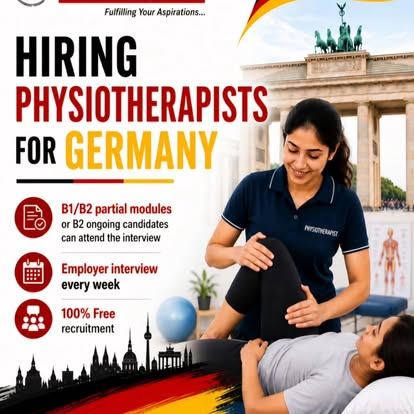
Hiring Physiotherapists for Germany
Attend employer interviews every week and receive your German employment offer letter! Candidates with B1/B2 partial modules or ongoing B2 can apply immediately.
- ✓Weekly Employer Interviews: Direct contact with German clinics.
- ✓B1/B2 Candidates Eligible: Apply while completing language modules.
- ✓Zero Recruitment Fees: Ethical placement under German standards.
1. Why Choose Germany for a Physiotherapy Career?
Germany has a growing demand for skilled healthcare professionals due to an ageing population and increasing rehabilitation needs. Physiotherapists are employed across public hospitals, rehabilitation centres, private clinics, sports medicine facilities, elderly care homes, and specialised healthcare institutions.
Working as a physiotherapist in Germany offers:
For internationally qualified physiotherapists, Germany provides a clear pathway to professional recognition and employment once eligibility criteria are met. Source: Bundesagentur für Arbeit.
2. Is There Demand for Physiotherapists in Germany?
Yes.
Germany continues to experience a shortfall of qualified healthcare professionals, including physiotherapists. Demand exists across both urban and rural regions, with employers actively seeking skilled professionals who meet licensing and language requirements.
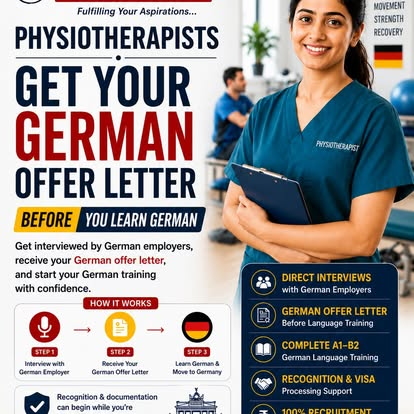
Get Your German Offer Letter BEFORE You Learn German
Interview with German employers first, receive your official German offer letter (*Arbeitsvertrag*), and begin your German language training with complete peace of mind!
3. Eligibility Requirements
To work as a physiotherapist in Germany, international applicants generally need to satisfy the following requirements:
Physiotherapy is a regulated profession in Germany, meaning professional recognition is required before practising under the protected professional title. Source: Bundesagentur für Arbeit.
4. Professional Qualification Recognition (Anerkennung)
One of the most important steps is obtaining recognition of your physiotherapy qualification.
The German authorities compare your education and clinical training with German standards. Depending on the assessment, you may receive:
Full Recognition
Direct equivalence granted (*Gleichwertigkeit*); eligible for professional license (*Urkunde*).
Partial Recognition
Substantial differences identified; additional training modules required.
Adaptation Training
Complete an adaptation period (*Anpassungslehrgang*) or Kenntnisprüfung in Germany while earning a salary.
Recognition procedures vary slightly depending on the German federal state where you intend to work. Official portal: Anerkennung Portal.
Physiotherapist Job Contracts & Visas
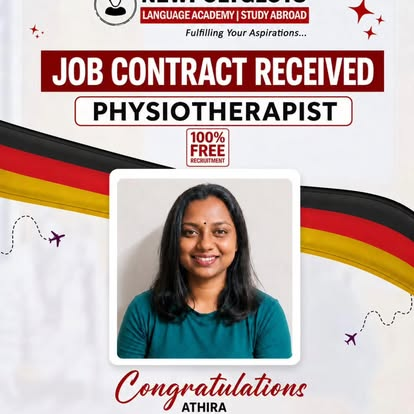
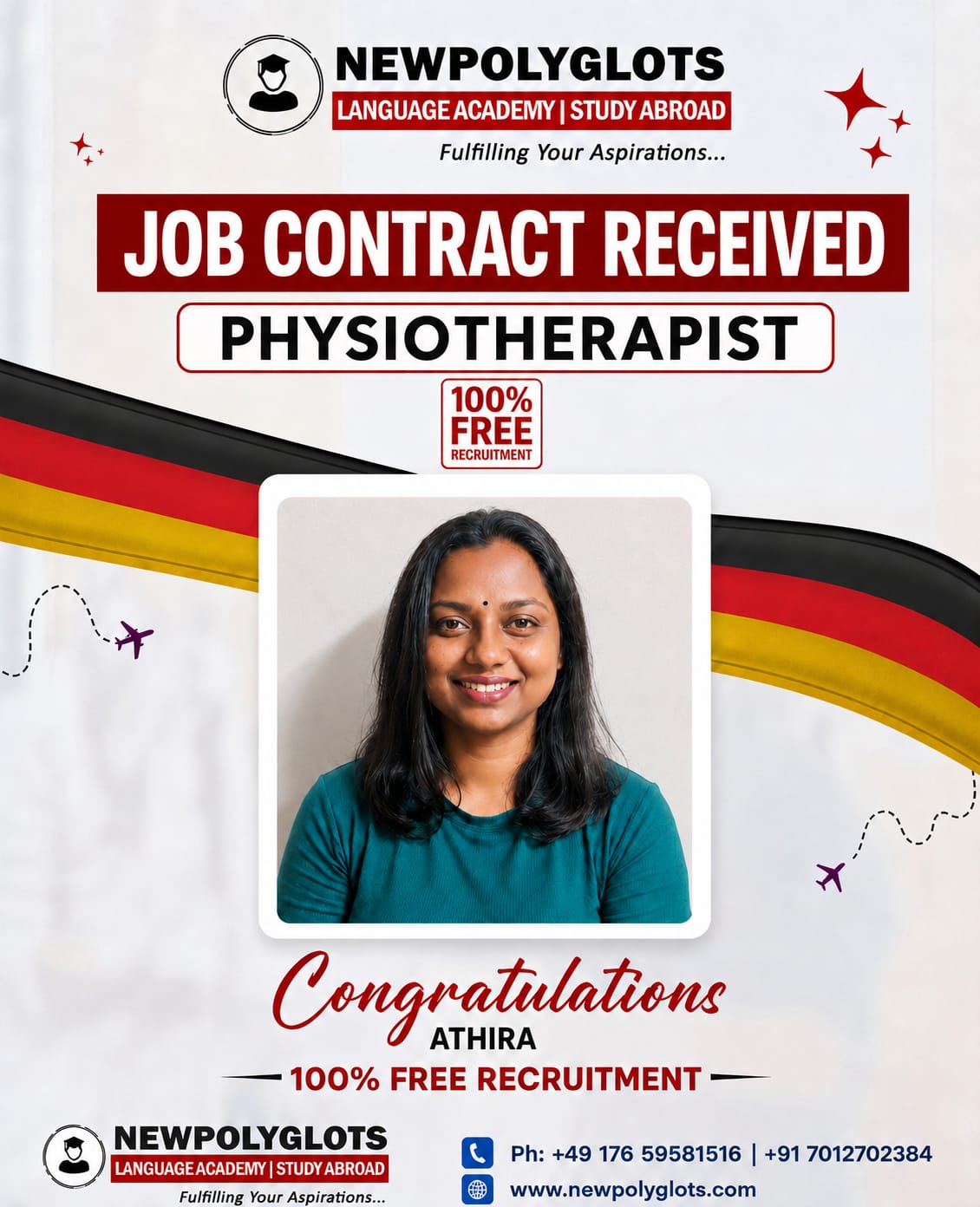
Athira — Received German Job Contract for Physiotherapy

Harshith — Granted Germany Opportunity Card Visa
5. German Language Requirements
Strong German communication skills are essential because physiotherapists interact with patients, doctors, nurses, and rehabilitation teams every day.
Most licensing authorities require German language proficiency at B2 level under the Common European Framework of Reference for Languages (CEFR). Some employers may recruit candidates earlier, but B2 is commonly required before practising independently. Source: Bundesportal.

German Language Classes for Healthcare Staff
Enroll in Newpolyglots structured German language coaching from A1 to B2. Prepare for Goethe & Telc examinations with experienced trainers and flexible online/offline batches.
Explore German Language Courses →6. Step-by-Step Process to Work in Germany
7. Typical Responsibilities & Benefits
Clinical Responsibilities
- • Assessing patient conditions & mobility limits
- • Developing personalized treatment plans
- • Conducting physical rehabilitation sessions
- • Educating patients on injury prevention
- • Maintaining clinical patient records
Key Benefits in Germany
- • Continuous professional development
- • Stable employment in high-demand sector
- • Modern rehabilitation technologies
- • Valuable international work experience
- • High quality of life, safety & work-life balance
Why Choose Newpolyglots?
11. Tips for Aspiring Physiotherapists
- ✓ Start learning German as early as possible.
- ✓ Understand the recognition process before applying for jobs.
- ✓ Keep educational documents organized and certified.
- ✓ Prepare professionally translated documents when required.
- ✓ Build confidence in speaking German through regular practice.
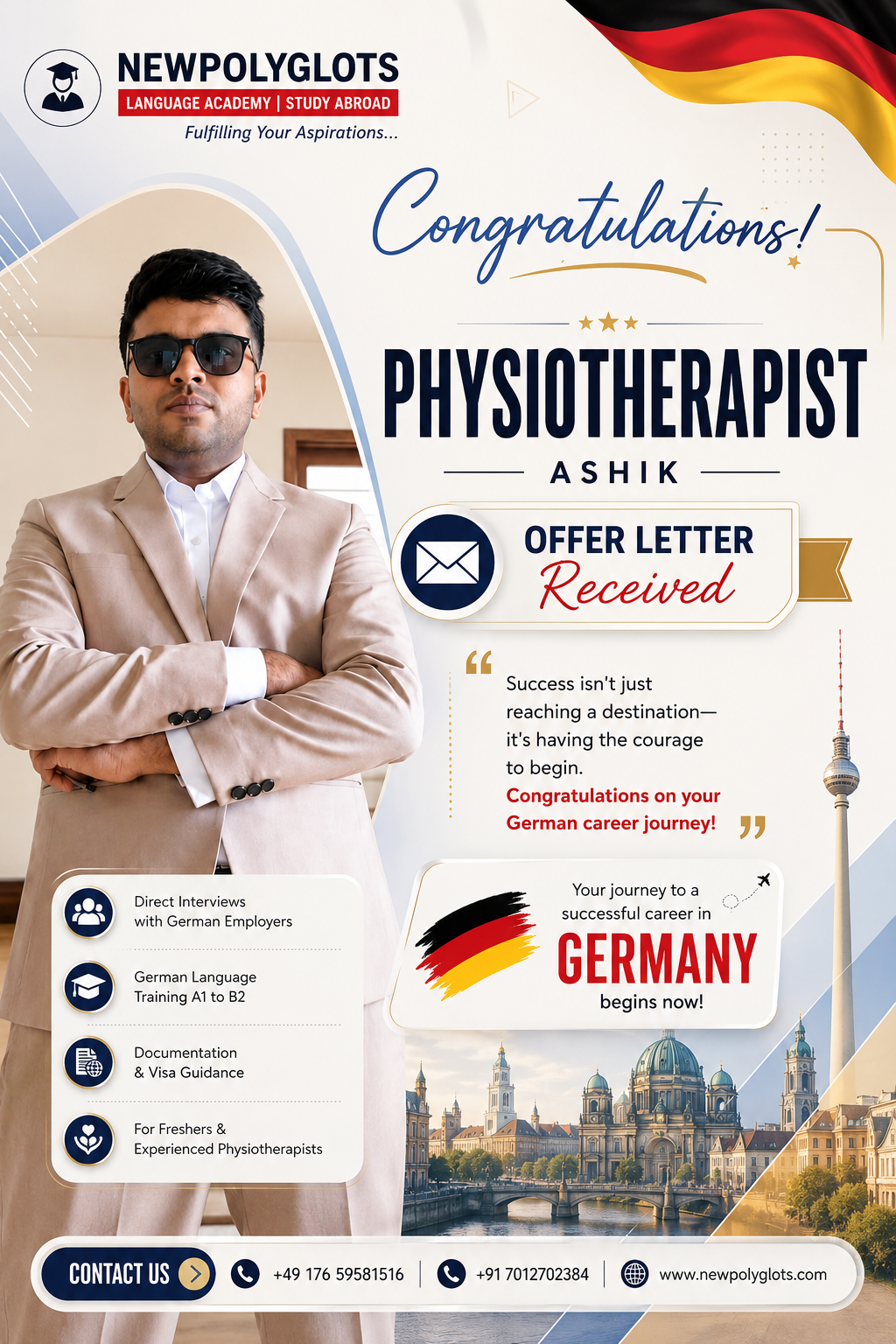
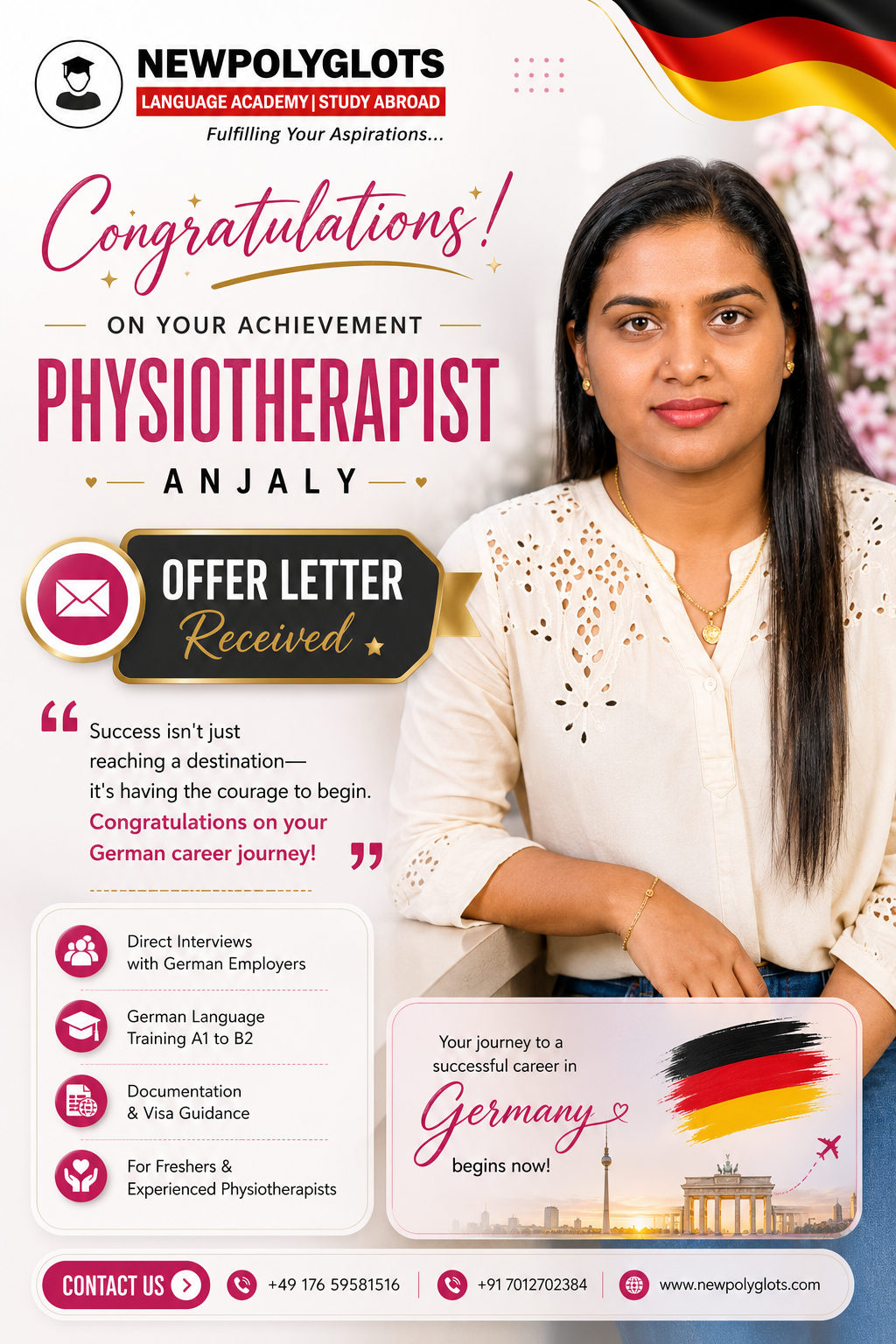
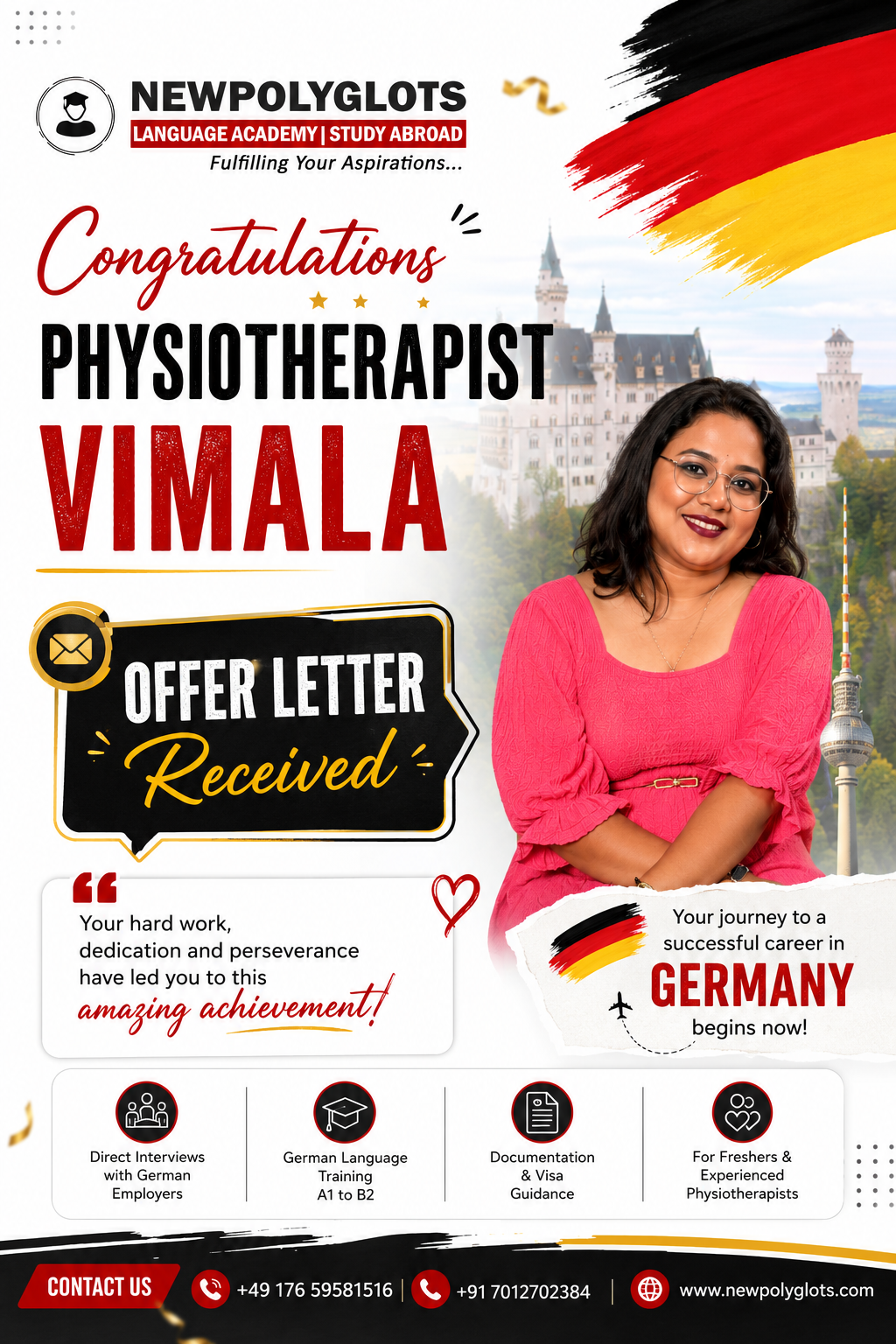
Physiotherapy Candidate Placements & Visas
Indian BPT & DPT physiotherapists placed in leading German rehabilitation clinics and hospitals.

Frequently Asked Questions
Can Indian physiotherapists work in Germany?
Yes. Qualified physiotherapists from India and other countries can work in Germany after completing the qualification recognition process, meeting language requirements, and obtaining a work visa. Source: Bundesagentur für Arbeit.
Is German language mandatory?
Yes. As physiotherapy is a patient-facing profession, German language proficiency is generally required. Most licensing authorities require B2-level German. Source: Bund.de.
What is Anerkennung?
Anerkennung is the official recognition process through which German authorities assess whether your professional qualification is equivalent to German standards. Source: Anerkennung Portal.
Can I apply before completing B2 German?
In some cases, you may begin parts of the recognition process earlier or attend weekly employer interviews through Newpolyglots to secure an offer letter before finishing B2 language training.
How can Newpolyglots help?
Newpolyglots provides structured German language training from A1 to B2, helping healthcare professionals build the communication skills needed for professional registration and employment in Germany.
Build Your Physiotherapy Career in Germany
Your journey towards an international healthcare career starts with the right language skills. Learn German with experienced trainers at Newpolyglots.